Wednesday, December 18, 2024

Uchihara Oji to Shishigasa Pass Kumano Kodo Kiiji Route


Saturday, March 26th, 2016, and I continue north on day 7 of my walk along the Saigoku Kannon Pilgrimage which at this point still follows the Kumano Kodo, the World Heritage registered pilgrimage routes.


I am following the Kiiji Route of the Kumano Kodo which ran from the imperial capital in Kyoto down to the Kumano Shrines. For the previous two days since I left Tanabe where the Nakahechi Route heads into the mountains The Kiiji route has followed the coast.


Now it heads inland and over the mountains on what was historically considered a difficult part of the route.


Heading north the narrow road passes several monuments to sites of former Oji, the 99 shrines that lay upon the route.


Some are still existant as shrines, and of course there are numerous roadside statues.


The route is pretty well marked and I believe the signage has gotten even more prolific since I walked it 8 years ago.


There are numerous artworks along the way depicting pilgrims, usual high-class, on the route in historical times.


The site of Kutsukake Oji, the 50th Oji, marks a kind of halfway point on the pilgrimage route.


As the road steepens the trail heads off along a section of cobblestone road. Apparently this is the longest section of the old paved route still in existence.


Eventually the trail levels out at Shishigasstoge, the pass at about 350 meters above sea level.


During the Edo Period there was a teahouse for travellers at the pass, and also other teahouses along the way. All have disappeared, mostly the the Meiji Period when trains and modern  roads led to the old paths becoming hardly used.


The plum blossoms were particularly appealing as they were in full bloom at this altitude.


Downhill from here is quite steep but mostly on a narrow asphalt or concrete road.


While not as dramatic as the far more popular Kumano Kodo routes to the south, this section is easily accessible for a shorter walk along the Kumano Kodo without necessitating much planning and expense.


Monday, December 16, 2024

Hozo-in Temple 84 Kyushu Pilgrimage


Temple 84 was hard to find as it is in a built up area and accessible via a narrow lane. It ios located on the old Karatsu Kaido in Meinohama.


It was founded in the early Showa Period, so probably before WWII.


The founder worked as a follower of the abbot of the famous Daikakuji Temple in Kyoto and was apparently "awarded" the chrysanthemum seal carved in the gates.


Interestingly it was the third head priest who envisaged the Kyushu Pilgrimage and did all the work finding the 108 sites around Kyushu connected to Kobo Daishi.


The honzon is an Eleven-faced Kannon, and being only a small place has a wide range of diverse statuary in the small grounds.


This was the final day of my 77 day walk along the pilgrimage and just needed this short ten kilometers section through Mrinohama to finish. The previous post was on temple 108 I visited yesterday.

Sunday, December 15, 2024

Sutra Storehouse at Anyoji Temple


Anyoji Temple in Iwami Ginzan, the World Heritage silver mine area in Shimane is known as the Crustal Temple, but I will cover that in a later post. For now we are looking at the Sutra Storehouse of the temple.


Originally located on top of the mountain, it was founded as a Tendai temple in the early15th century but converted to Pure Land sect in 1523.


The storehouse, said to be from when it was a Tendai temple, has an excellent piece of kote-e above the door. Kote-e, literally "trowel picture" are plaster reliefs found mostly on temples and storehouses, though sometimes on homes. Further examples can be found in this post on Kitsuki.


The storehouse also houses a statue of Shaka Nyorai, Shakyamuni, the historical Buddha.


Flanked by attendants, it is also said to date from when the temple was Tendai.


Friday, December 13, 2024

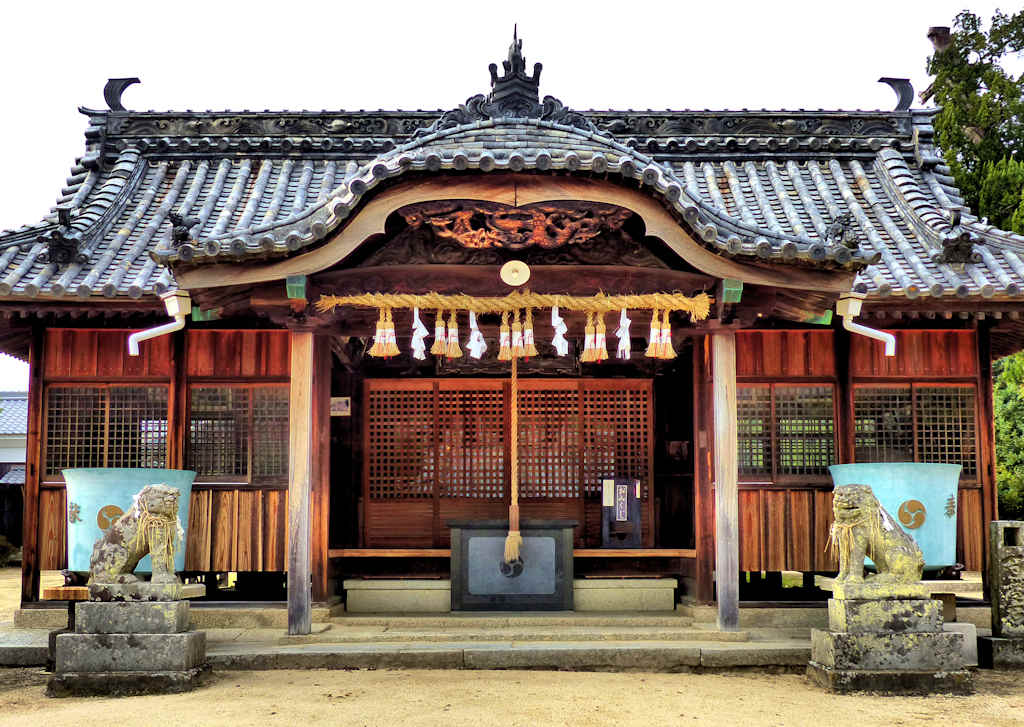
Kameyama Hachimangu Shrine Ikeda


Kameyama Hachimangu shrine in Ikeda Port on Shodoshima is the town's main shrine and one of the major shrines on the island.


I can find no date for its founding, but neighbouring Choshoji Temple now houses three statues that were the shintai for Kameyama Hachimangu until 1868.


These statues depicting Hachiman in Buddhist form are dated to the late Heian Period, which suggests that the shrine is at least that old and  it is also registered in the Engi Shiki of the early 10th century


Down below I earlier visited the Ikeda Saijiki, a kind of seated area area where the shrines annual festival takes place.


Taking place in mid October, the festival features a parade and the main attraction of giant drum floats from each of the villages that make up the town.


However, it used to be a much bigger affair. A painting dated to 1812 showed boat races, kagura or kabuki performances, and horseback archery as well as the drum floats.


Being a Hachiman shrine, the main deity is Homuda Wake, otherwise known as Emperor Ojin, his mother, Okinagahime, otherwise known as Jingu, and Nakatsuhime, his wife/consort.


There didn't seem to be many secondary shrines in the grounds, though there is a small Gokoku Shrine. The priest was very kind and helpful. He brought me some tourist literature in English and offered to give me a ride back to my room, but on this third day of walking the Shodoshima Pilgrimage, I still had a few more temples to visit.


The previous post was on Choshoji Temple next door.


Thursday, December 12, 2024

Chinkokuji Okunoin Temple 108 Kyushu Pilgrimage


Up a flight of steps overlooking the main temple grounds is the okunoin of Chinkokuji Temple, the cave where Kobo Daishi performed rituals after returning from China in 806.


I reached it on Friday, March 28th, 2014, the 76th day of walking along the longest pilgrimage route in Japan, and I would guess somewhat over 2,200 kilometers.


I started on Christmas Day in 2012, and so it has taken me just about 15 months, usually in 2 week segments to finish it.


BUT!!!!!... on yesterdays walk I missed the last ten kilometers as I came into Fukuoka City from the south, and that includes two pilgrimage temples, so tomorrow I must go and do that section.

Wednesday, December 11, 2024

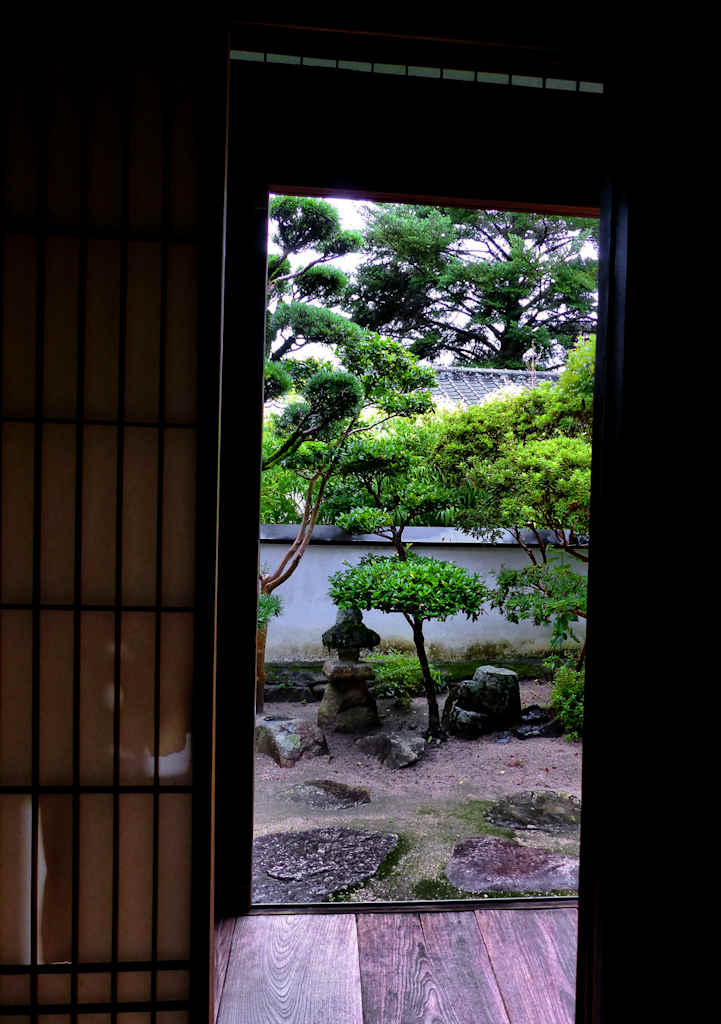
Haibara Samurai Residence


The former Haibara Samurai Residence is located in Takahashi, the castle town in the mountains of central Okayama, on the Takahashi River.


It is on a road of former samurai residences at the north of the town, near the base of the mountain on top of which sits Bitchi Matsuyama Castle, known as the highest castle in Japan.


At 430 meters above sea level, it is one of the few castles remaining in Japan with an original tenshu, or keep, and the only mountaintop castle with an original keep.


The former Haibara Residence was built about 170 years ago at the end of the Edo Period.


Unusual for a samurai residence, it was built in what is known as sukiya-style, normally associated with temples and teahouses.


Numerous artifacts including furniture and some armour are on display.


The gardens have also been kept in their original form.


There is a joint entry ticket to this house and the slightly more impressive Orii House next door which I will post about next.


Takahashi is a little off the main tourist routes, but is well worth a visit. While it is not a Preservation District, it has plenty of traditional architecture as well as the amazing castle, some lovely temples, and just outside town a great modern art museum.


On this visit, my second to Takahashi, I was on day 6 of my walk along the Chugoku Kannon Pilgrimage.


The previous post was on nearby Raikyuji Temple which was used as a home by the daimyo and has an amazing garden by Kobori Enshu.