Thursday, April 25, 2013
Monday, April 22, 2013
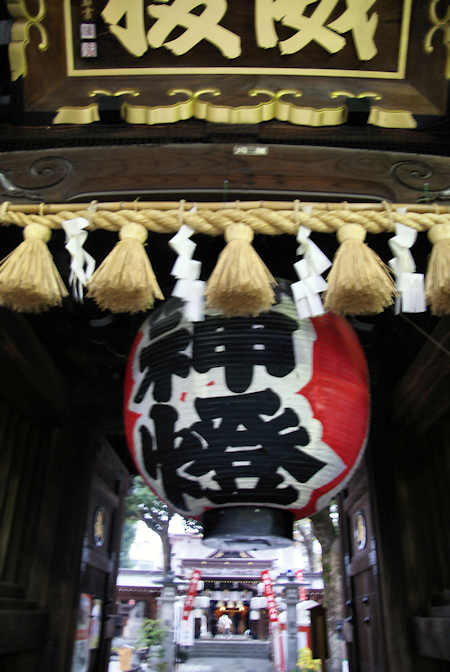
Ikui Shrine
Ikui Shrine is a small shrine in Katsuura Town between temples 19 and 20 of the Shikoku Pilgrimage.
Ikui is another way of reading Ebisu, and this is the kami enshrined here, rather Kotoshironushi, the official identity of Ebisu since the Meiji Period.
The shrine is listed in the Engi Shiki, a court document from the early tenth Century that, among other things, lists 2,861 shrines across Japan that received annual offerings from the Imperial Court.
This website has details of all the shrines in the Engi Shiki, unfortunately only in Japanese.
Labels:
ebisu,
engi shiki,
henro,
kotoshironushi,
Shrine,
tokushima
Thursday, April 18, 2013
Star Sand Beach
There are two Hoshizuna (star sand) beaches in the Yaeyama Islands, one on Taketomi, and this one on the north coast of Iriomote.
No crowds, no deckchairs, no ice creams.....
Warm water..... in midwinter the water temperature drops to 20 degrees celsius...
The star sand is actually the skeleton, about 1mm across, of an organism...
Saturday, April 13, 2013
The View from Mount Nosoko
At 282 meters Mount Nosoko is not the highest mountain on Ishigaki Island, but its distinctive shape offers 360 degree views from its summit.
To the north the Hirakubo Peninsula.
Down below, coral reefs and turquoise seas...
Locally the mountain is known as Nosoko Mape after a young woman named mape who climbed to the top so she could see the island where her lover lived but was so despondent that another higher mountain blocked her view that she turned to stone...
To the south the east coast of Ishigaki...
After coming down we went to Nosoko Beach..... a woman was digging for some kind of small clam/shellfish, and after she left we had the whole beach to ourselves....
Thursday, April 11, 2013
Japanese Umbrellas
On vacation down in Okinawa right now but its grey and cloudy and rainy so instead of white sand and turquoise water you get umbrellas.....
These were at Nachi Taisha down in Kumano, Wakayama.
This one was used to protect the taiko during the mikoshi procession at a shrine matsuri in Nakatsu.
Of course regular "western" type umbrellas are more common....
The classic red..... in Tomonoura...
Western style, but used by priests at Hongu Taisha....
Friday, April 5, 2013
Kushida Shrine
Kushida Shrine
There is a huge Camphor tree, said to be 1,000 years old, and 2 stone anchors which is claimed came from the invading Mongol fleet but which are in fact from Chinese merchant ships.
Sunday, March 31, 2013
Kasuga Shrine, Hagi
The Kasuga Shrine in Hagi is located on the southern edge of the old samurai district and is one of the approximately 3000 branches of the famous Kasuga Taisha in Nara which is the family shrine of the Fujiwara Family, arguably the most powerful family in Japan for many centuries.
Though most common nowadays, stone komainu were a later feature and were preceded by wooden ones inside the shrine building or later in the zuijinmon.
By the side of the shrine building is an old chinowa, a ring used for purification. usually in the spring a new one will be made and erected in front of the shrine and parishioners will pass through it.
The main kami enshrined here are the same 4 as Kasuga Taisha, Amenokoyane, Takemikazuchi, Futsunushi, both of whom took part in kuniyuzuri, and Himegami, which seems to be a generic name for consorts of male kami. According to Izumo records only Futsunushi came to Izumo for the kuniyuzuri.
The signboard also lists another kami that I had not heard of before:- Iwatsutsuno-o, who, like Takemikazuchi was formed from the blood left on the sword Izanagi used to slay the fire god with.
There were some secondary shrines in the grounds but the signboard gave no details....
Sunday, March 17, 2013
Nakatsu Castle
Nakatsu Castle is the main feature of the design on Nakatsu Citys draincover in Oita, Kyushu.
Considered on of the 3 great "water castles" that used river and sea as part of its defences. The other two being Imabari and Takamatsu.
The original was built in 1588 and was burned down in 1877 during the Seinan War, commonly called the Satsuma Rebellion.
The current concrete keep was built in 1964. No-one knew what the original keep looked like so it was modelled instead on Hagi castles keep.
Friday, March 15, 2013
Once the biggest planetarium in the world
When it opened in 1994 this was the biggest planetariun in the world.
With a diameter of 30 meters this 300-seat planetarium can project up to 25,000 stars.
However, a couple of years ago it lost the title to a bigger one constructed in Nagoya.
Still impressive, surrounded by a reflective pool of water, this one is part of the Ehime Science Museum complex designed by Kisho Kurokawa and is located in Niihama.
Labels:
Architecture,
ehime,
kisho kurokawa,
Museum,
shikoku
Wednesday, March 13, 2013
Shikoku 88 Temple 20 Kakurinji
Statues of cranes are in the Nio gate and at other spots around the temple as cranes feature in the founding legend of the temple and Kakurinji means Crane Forest temple.
Located at 550 meters above sea level it is a fine example of a mountain top temple and unlike most other temples in Tokushima on the pilgrimage it has never burnt down. Unfortunately I was there during monsoon rains at the start of a typhoon and so wasnt able to explore the temple as much as I would have liked.
According to the legend Kukai had a dream while in the area that told him that in earlier times there had been a buddhist worship site here so he climbed the mountain to restore it. He found a tiny statue of Jizo being guarded by a pair of cranes and so carved a larger wooden statue of Jizo and placed the miniature one inside it.
Later kukais nephew completed the temple buildings. Over the centuries Kakurinji received support and protection from many powerful figures including Minamoto Yoritomo, Hachisuka Iemasa, and Hachisuka Muneteru.
The main hall supposedly dates back to 1604 but most of the other buildings are more recent, mostly from the 19th Century.
Subscribe to:
Comments (Atom)