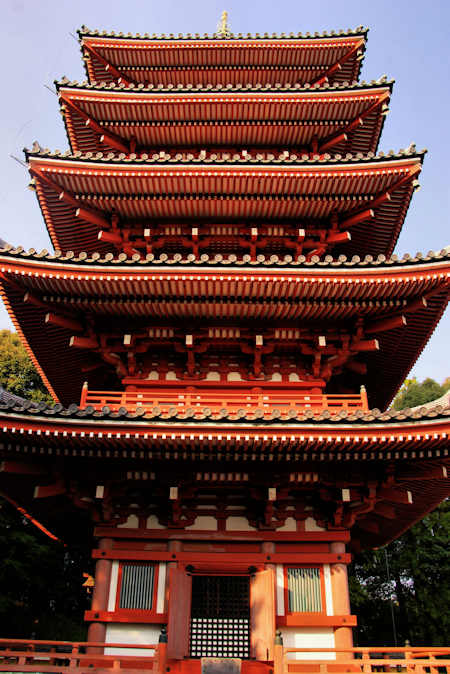
Taga Shrine in Nogata is the main shrine of the area and when I visited just before the new year they were getting ready for the influx of visitors in the new year.
It is located on a small hill next to the railway tracks and near the
local Coal Museum.
Two large, relatively modern, rather chunky, komainu guard the main path.
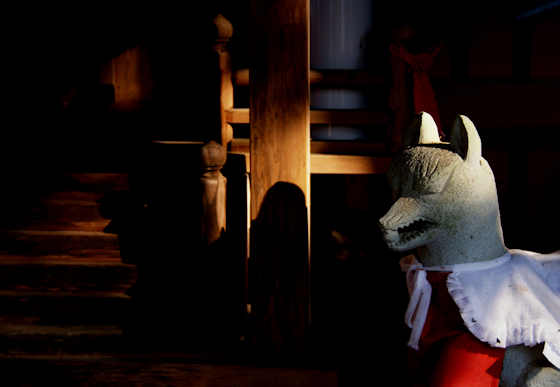
Housed inside the main gate are a fine pair of older, wooden komainu, the earlier form that komainu took before the exterior, stone ones that are now most common.
It is not known for sure when the shrine was founded although it claims to go back to the "Age of the Gods". Certainly, in 717 it existed and was known as Hikaru Daimyojin after the mountain called Hikaruyama.
A couple of decades later it was referred to as Myoken Daimyojin. The more I learn, the greater it seems the Myoken cult was in ancient Japan.
The shrine was destroyed by war several times and rebuilt and sometimes renamed. In the mid 17th century it was majorly rebuilt and called Myoken Shrine. In the late 17th century it was renamed Taga Shrine.
The main kami of the shrine are Izanagi and Izanami, and the crest is a pair of wagtails as it was by watching a pair of wagtails mating that brother and sister Izanagi and Izanami learnt how to procreate.
I visited on December 28th, day 4 of my first walk around Kyushu, and preparations were underway for the busiest time of the shrine year, New Year.
In one of the rooms in the shrine office many young girls, probably high school or university students, were taking a class for their part time job as shrine maidens for the new year period.
There were many sub shrines within the grounds.
Next sto
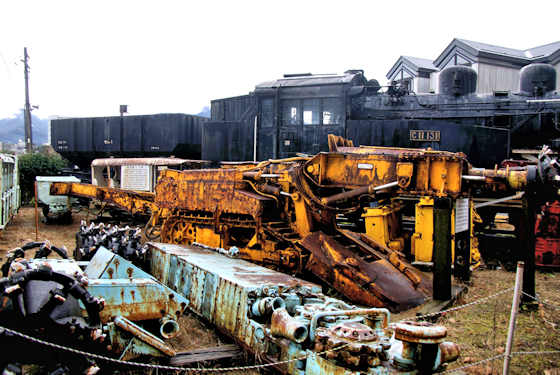
p was the nearby Coal Museum as this was a major coal-producing region of Japan until the mid 20th century






 Posts
Posts


