Showing posts with label sunset. Show all posts

Thursday, October 23, 2025

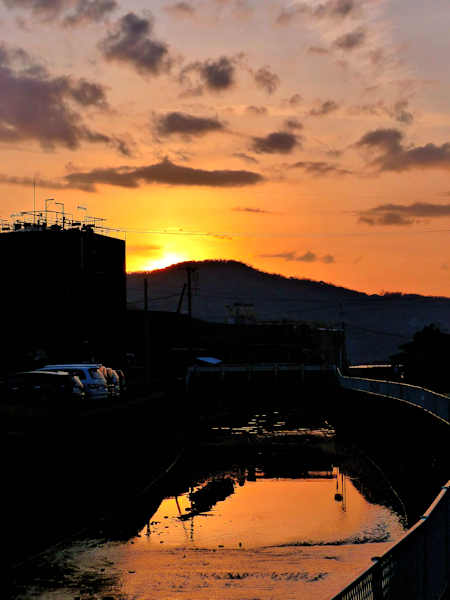
The Sun Sets on the Yamaguchi Coastline


As day 20 draws to a close, I find myself back on the coast for the final leg, walking into Tokuyama.


Our feathered friends seem to have called it a day....


Now I am in the Shunan industrial zone and once again factories dominate the coastline...


Not sure what all these industrial facilities are producing, though I'm pretty sure some are refineries...


I've also read ammonia and synthetic rubber are also produced here..


There are some pretty tall chimneys around Tokuyama, maybe 200 mters tall, spewing who knows what into the atmosphere.


When I visited Tokuyama some years ago I was surprised to learn that there were boat tours to views the night-time views of the industrial area.


Called Kojo Yakei in Japanese, apparently, these tours are increasingly popular in many of the industrial areas especially around Tokyo.


I now read that here in the Shunan area of Yamaguchi there are also bus tours in the evening to various spots with views of the illuminated industrial superstructures.


One hotel has a few rooms with views of the factories and they are priced much higher than the room that do not.


When I finally got into Tokuyama and checked into my room I went down to the small park next to the ferry terminal for the ferry to Kunisaki in Oita, a ferry I have taken many times.


There were illuminations in the park, shown in the final three photos of this post.


If you would like to subscribe by email just leave your email address in the comments below. It will not be published and made public. I post new content almost everyday, and send out an email about twice a month with short descriptions and links to the last ten posts.

Friday, May 30, 2025

Uranouchi Bay to Susaki


After alighting from the small ferryboat, I briskly head west towards Susaki where I have a room booked for the night.


It's late November so the days are relatively short with 10 hours of sunshine, and I started the day well before sunrise, but I still have about 10k to go to reach mu hotel so don't dawdle.


I pass a few small wayside shrines....


It's been some time since the rice was cut and harvested but the stalks have had a couple of months to start regrowing


This small henro hut was one used for overnight stays.... there was a portaloo nearby, running water, and an electricity outlet.... right next to the road but a welcome spot for those on a tight budget. I do get the impression that nowadays sleeping out on the henro trail is discouraged and frowned upon, and that is a real shame as it has always been a pilgrimage for the less well off "traveller"  rather than a package tour for tourists.


Approaching Susaki, the other side of the road and river is a huge industrial complex.


I believe this was a Kibune Shrine, but with the sun going down, I did not stop and explore...


It is a huge cement plant with a power station..... I know making cement uses a huge amount of heat, but am not sure if the power plant is to generate the power to produce the cement or if the heat used to produce the cement is used to make electricity.....


Though the standard catch-phrase for Japan in media is "resource-poor", it is in fact totally self-sufficient in cement and concrete...


As the small river I was walking down reaches the bigger Sakura River a big heron takes off...


The Sakura River widens at this point just before emptying into the sea and the setting sun paints a nice picture as I cross over into Susaki and get close to my bed for the night.


And so ends my 18th day walking along the Shikoku 88 temple pilgrimage known as Ohenro.


The previous post was on the ferry ride up Uranouchi Bay.


Wednesday, March 2, 2022

Mukai-an Temple Koshin-do Temple & Saisho-an Temple on the Shodoshima Pilgrimage

Mukai-an Temple

Japan.

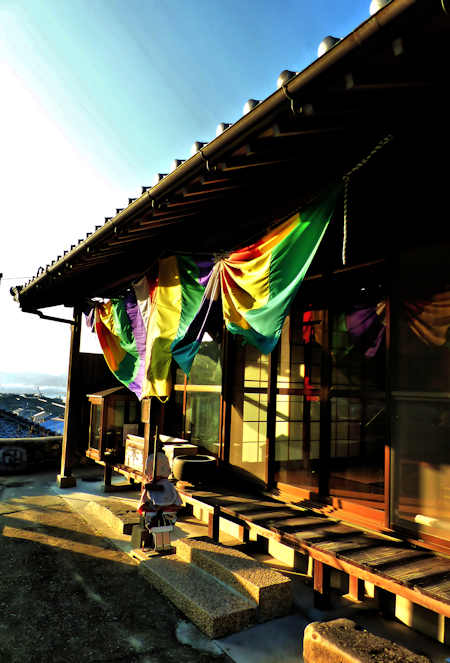
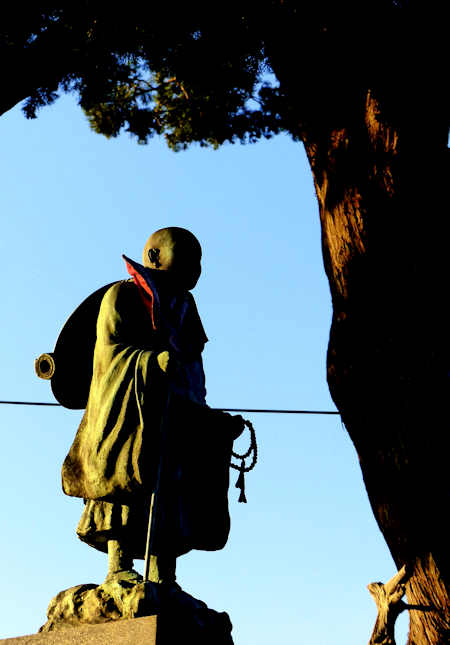
Christmas Eve, 2015, was fast drawing to a close, and I still had three more temples to visit on the route back to my ryokan. I had just come down  from Mount Dounzan and the amazing cave temples, Dounzan and Goishizan, and then stopped in at Jokoji, temple 8, on this, my first day walking the Shodoshima pilgrimage.

Temple.

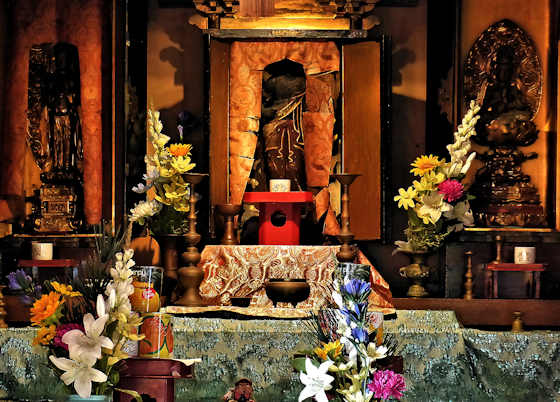
Temple number 7, as with 9 and 10, was just a small unmanned building. The honzon is an Amida.


Just a couple of days past the winter solstice, the sun was rushing down and it becane obvious that it would soon be dark so I did not tarry nor explore


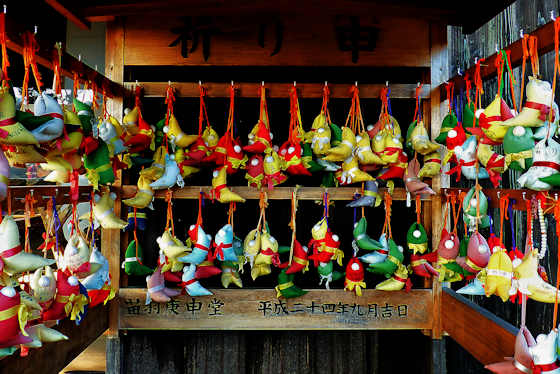
Temple 9 was Koshin-do, a site of the very popular Koshin cult. A Daoist cult/faith, it is most well known nowadays for the three monkeys. Many Koshin sites also have these strange looking dolls called Sarubobo in some places.


Many Koshin sites are now classed as Shinto shrines, and some, like here, as Buddhist temples. The honzon here is a Fudo Myoo.


My route now took me along the main road of Noma. There was some nice traditional architecture, though my favorite of the day was the old school house that was made famous in a movie.

Japan.

The sun dipped below the hills as I passed through the biggest soy sauce factory of the island. 


It was almost dark when I reached  Saisho-an, number 10. It was created in the separation of shrines and temples, and the honzon, an Aizen Myoo was originally in the shrine next door.


It was completely dark by the time I got back to my room, and a little while later there was a knock at my door. It was the old priest I had met at Kannonji, and then later at Dounzan. He had brought me a gift, a delightful print of Fudo Myo!! A truly excellent day to start the pilgrimage with, that bodes well for the coming days.

Wild Japan

Monday, June 14, 2021

Down the Kikuchi River


December 20th, the 48th day of my first walk around Kyushu and I left Yamaga to head down to Tamana. First stop was the burial mounds museum I posted about here and here. Pictured above are some of the haniwa reproductions. Haniwa were the ceramic figures placed on top of the burial mounds. Horses and chickens appear here. Houses, deer, and human figures are also common.


My route takes me roughly alog the Kikuchi River, though here the land is fairly flat and the river meansers so the road sometimes cuts straight. I am still surprised by how much agricuture takes place under plastic. I have no idea what was growing here, though being December 20th, the coldest weather had yet to arrive.


A statue modelled on a clay haniwa marks the entrance to a cluster of tombs, the largest being the Etafunayama Mound. The grave goods excavated from the burial chamber included multiple swords, mirrors, and jewels, collectively known as the three symbols of Imperial power, or the Imperial Regalia.


November and December are my favorite times for walking around western Japan. The weather is usually good, the light is great, and the lack of mosquitoes makes sleeping out more pleasant, but the days are somewhat short.


Arched stone bridges would not be particularly noreworthy in many places, but in Japan they are somewhat unusual. Introduced by Chinese monks in Nagasaki most of them seem to be in areas near to Nagasaki. Therevwere several more in Tamana.
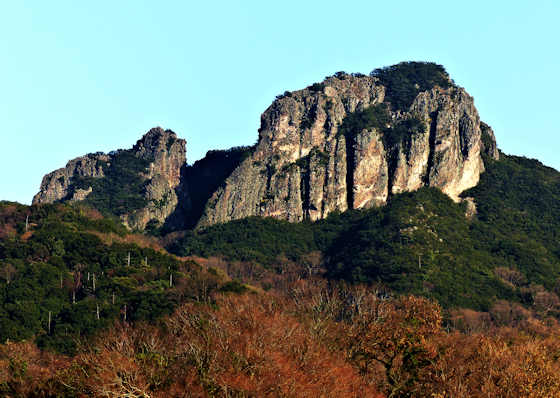
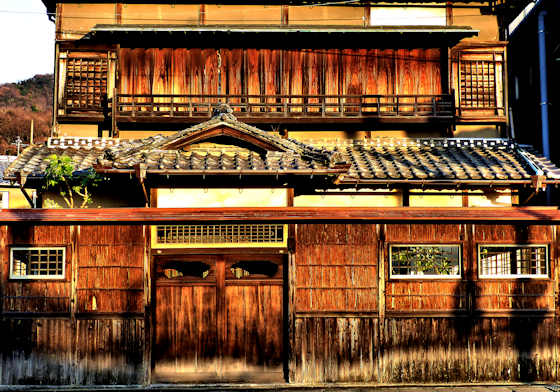

Being the solstive eve I found myself a nice high-point to spend the night.

Sunday, July 5, 2020

Fall Colors... Sunset... & Illuminations at Sogi Falls


At Sogi Falls in the mountains of Kagoshima around Isa City the fall colors were in full swing. A big park is there and that was where I was planning to sleep out, but I did not forsee that the place was lit up at night so there werelots of security guards to protect the generators and lights and such.


As the sun went down I headed across the old bridge and found a suitable place to lay out my bag and then headed back to the park to take some more photos.....


There were very few people and with the illuminations of the waterfalls and the river gorge as well as the foliage it was unusual and a nice surprise


Sogi Falls is not so well known but certainly worth a visit if you are in the area