Sunday, February 25, 2024

Sechibaru Coal Mine Museum


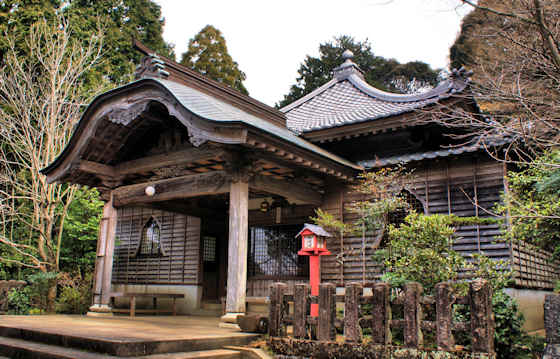
In the high country north of Sasebo, near the border with the  Arita district is the small local history museum dedicated to the former coal industry in the area of Sechibaru. Built as the offices of the local coal mine, the building is registered as an important cultural property as it is the only example of a Western-style building of stone in the northern part of Nagasaki prefecture. In Nagasaki City itself, there are numerous examples.


I am intrigued by the history of coal mining in Japan for two main reasons. One is that my grandfather and my father were coalminers and I grew up in the shadow of a coalmine. The second is that it is a little known part of modern Japanese history that kind of contradicts some of its cherished "myths".


I didn't know there were mines in this part of Nagasaki. I knew most Japanese coal was mined in northern Kyushu, with Battleship Island off the coast of Nagasaki being one of the famous sites, but northern Fukuoka and the Kumamoto-Fukuoka border area being some of the major coalfields. Early in this pilgrimage, I visited a coal mine museum in Nogata. A much longer article I wrote delving into the subject is here


There was not actually much on display, though the old photos were cool. I did learn that Kansai Coal Company, the owner of the mines, built a railway line in 1896 from Sechibaru down the valley to take the coal out. The previous post in this series on day 67 of my pilgrimage was on the nearby Oyamazumi Shrine and its ancient forest.


Saturday, February 24, 2024

From Kirime Oji to Tsui Oji along the Kumano Kodo Kiiji


On day 6 of my walk along the Saigoku pilgrimage, I started at Kirime Station in Ninami Town, and headed north. For the first week or so of the walk, I was following the Kumano Kodo, in reverse. This section from Tanabe up to Osaka, is known as the Kiiji.


I crossed the Kirime River and soon came to the first stop of the day, Kirime Shrine, or Kirime Oji.


Oji were the 99 shrines along the Kumano Kodo that pilgrims would visit. Many have long since disappeared, some have monuments where they once stood, and a few still have structures.


Kirime is one of the 5 most important oji. Hosshinmon Oji, which I visited on day 3, and Takijiri Oji, which I visited on day 4, are another 2 of the 5.


Believed to have been established long before the Kumano Kodo became an imperial pilgrimage route, enshrined here include Sarutahiko, Kanayamahiko, Susano, Kotoshironushi, Ebisu, etc with the main deity being Emperor Ojin, therefore Hachiman.
 

Retired Emperor Gotoba composed poetry while here, and Prince Moriyoshi, son of Emperor Godaigo had a vision while staying here.


Not far further along, I passed by the site of Tomi Oji, also known as Ikuraga Oji, and said to be one of the oldest Oji.


I carried on along the coastal Route 42 and crossed the Inami River and by Inami fishing port.


Behind the port I passed through a torii and up a small path to the site of the former Tsui Oji.


According to some sources Tsui Oji was originally at a different place, but was moved here during the Edo eriod and became known as Kannon Oji.


Without any buildings, but with a small Buddhist statue and a rack of ema votive plaques, the site was well maintained by local people.


The previous post was on Kashima Shrine in Minabe


Tuesday, February 20, 2024

The Forest at Oyamazumi Shrine in Sechibaru


This Oyamazumi Shrine is located in Seechibaru Town in the high country north of Sasebo, and is one of several Oyamazumi shrines in the region.


Oyamatsumi was an older brother to Amaterasu and Susano and there are many shrines for him across Japan, the most famous being the one on Omishima Island which has the greatest collection of samurai armour and weapons in Japan in its collection.


What makes this particular local shrine of interest is the forest environment around it which is a rare example of old-growth forest in Japan.


It was designated a Natural Monument in 1972 primarily because it is home to a stand of Japanese Chinquapin trees, Castanopsis cuspidata, a tree related to Beech and Oak, it is an evergreen with edible nuts that grows to 20 to 30 meters in height. Covering less than 3 acres, is is very biodiverse with many other species of trees, both evergreen and deciduous, as well as numerous bushes and smaller plants including a rare fern.


Called Tsuburajii in Japanese, the dead wood of the Japanese Chinquapin is one of the best hosts for shiitake mushrooms and is actually the origin of the word shiitake itself. a combination of the Japanese kanji for tsuburajii(椎)  and take (mushroom)(茸).


The previous post was on Saikoji Temple which lies across the mountain in the valley I had walked up. I was now heading down the valley to the next pilgrimage temple.


Monday, February 19, 2024

From 28 Yakushi-do to 29 Kazaana-an


Yakushi-do, temple 28 on the Shodoshima Pilgrimage is located on the east coast and about halfway down the Mito peninsula that has the southernmost point of Shodoshima at its tip.


It is a fairly small, simple, and new structure that has been moved here fairly recently from higher up the slope. It is said that Crown Prince Taisho visited on his trip to the island in the first years of the twentieth century.


The new location is in front of an older cemetery and right next to the village shrine. It is unnamed with no information but the very small shimenawa is of a kind that still has the ears of rice attached to the ends of the straw.


I sit in the little covered rest area next to the Yakushido and drink a can of coffee from the vending machine while I ponder my route. The guide book I am using is written for car pilgrims and says to keep going south down the coast road and then cross over the peninsula at its narrowest part before heading up to the next temple.


Signs from the Yakushi-do point up through the village and I decide to follow them as my experience yesterday suggests that the walking path is quicker than the car route.


I switch back up through the village and take a path leading up the hillside. Once on top the path follows the narrow ridge before starting to descend down the other side.


I pass by a small altar and believe it to be the okunoin of temple 29.


A pair of dolls seem really creepy..... many Japanese I have spoken with seem very superstitious when it comes to old dolls.....


A little further and I come to temple 29 Kazaana-an. There are great views down the coast and across to Shikoku. I believe this is the southernmost point of the pilgrimage.


It is a modern building and well looked after.


I see a couple of young women heading down the stairs. These are the first other visitors to a temple I have seen since starting three days ago.


The honzon is a Jizo, though it, and several other statues, are locked away. A reclining Buddha covered in blankets is in front of the altar.


There is a small Inari shrine. Representations of Inari are either of a young maiden or an old man. This one is the latter.


The previous post in this series on the Shodoshima pilgrimage was on my walk down the peninsula.


As I reach the road below the temple a young pilgrim is parking his bicycle. Our paths will cross several more times today

Saturday, February 17, 2024

Saikoji Temple 73 on the Kyushu Pilgrimage


Totakesan Saiko Temple, number 73 on the Shingon Kyushu Pilgrimage, is located in the high country north of Sasebo, Nagasaki, not far from the border with Arita in Saga.


The long, straight approach is lined with lanterns, and many of the statues that comprise a miniature 88 temple Shikoku Pilgrimage. The latter part of the approach has a trellis supporting wisteria.


There was a pond with a small shrine, probably a Benzaiten or a Suijin. Like much of the temple grounds, it seemed overgrown and unkempt, although I believe that since I visited a young priest has taken over the temple and has done a lot of renovation work.


A pair of stone Nio guard the main entrance gate.


The temple was founded in 1687 and was supported by the successive lords of the Hirado Domain.


It is said that at a nearby sacred rock and spring a priest had a vision of Kokuzo Bodhisattva, and so a statue of Kokuzo from a temple said to be founded by Gyoki across the mountains in Takeo, was transferred here and became the honzon.


The temple is also number 28 on the Kyushu Kannon Pilgrimage and number 17 on the Kyushu Jizo Pilgrimage.


A branch of Suitengu Shrine is within the temple grounds.


The grounds of the temple include some noteworthy trees that attract visitors. Most notable is a huge Omurazakura which is a cutting from the original Omurazakura lanted at the founding of the temple.


There is also a big Weeping Cherry and a Gyoiko Cherry with unusually coloured blooms, and something called a Turmeric Cherry.

There are also plenty of rhododendrons, and the aforementioned Wisteria.


Since the new priest took over in 2017 I believe the gardens have also been looked after much better than when I visited.


The previous post was on the Giant Fudo Myo statue adjacent to the temple.