Showing posts with label kappa. Show all posts

Saturday, August 16, 2025

Kappa Sightseeing Boat Oki Islands


The Kappa Sightseeing Boat operates three times a day for a one-hour-long scenic tour around the historic port area of Saigo on Dogo Island , Okinoshima, in the Sea of Japan off the north coast of mainland Shimane.


Tour participants meet at the Tourist Information Office near the ferry terminal, and a 5-minute walk through the back streets takes you to the jetty where you board the covered boats.


The boat first heads out to the narrow mouth of the sheltered inlet, where you can look back at the port and the high country in the middle of the island behind.

Some of the geologic features of the coast are pointed out by the guide, though the commentary is only in Japanese. 


The Oki Islands are a UNESCO Global Geopark, so geology is a well-covered topic throughout the islands with plenty of printed material and signs in English on it.


You may also catch sight of one of the huge car ferries or the high-speed passenger ferry coming or going.


 Before heading upriver, the boat makes a detour under the 260-meter-long Saigo Bridge, which carries traffic over to the island's only airport and to Shirataki Point, a favorite spot for sunset viewing.


After a few bends the river soon leaves the town behind and the banks are lined with reeds or trees. Here the guide points out a couple of the haunts of the Kappa, the mythological creature that is probably the best known yokai character in Japan and after whom the boat trip is named.


 Often translated into English as “water imp”, this green, scaly creature with a beak and turtle-like shell is known throughout Japan and is known for drowning horses and children. It really likes cucumber, so kappazushi, a kind of sushi made with cucumbers, is often left as offerings to appease it. At this point the guide sings a local folk song.


  After turning around the boat heads back and then takes the narrow channel that cuts through the middle of the old town. In some ways this is the most interesting part as the side by side houses literally come right down to the waters edge, with the older houses still with small jetties or steps down to the water. As you get closer to the port itself the sides of the river begin to fill with fishing boats.


Being an island, fishing has always been a major preoccupation with the inhabitants, but in earlier times the whole channel would have been a hive of activity because Saigo was a major trading port.


 Though much is made of the great roads built in the Edo period like the Tokaido or the Nakasendo, along which travelled the great entourages of daimyos travelling to Edo or the millions of pilgrims heading to Ise, it is worth remembering that Japan was basically a maritime nation, and the coasts and waterways carried much of the trade and communication.


Saigo Port was a stopping point on the Kitamaebune, a major trade route that ran from Hokkaido and the far north down the Japan Sea coast and then round into the Inland Sea to reach Osaka, the trading capital of the country. This was a safer and easier route than the shorter Pacific coast route, so this channel would have been filled with boats tying up, cargoes being tran-shipped, and supplies being taken onboard, and though not often mentioned, like ports everywhere in the world , there would have been brisk business for “female companionship”.


 To my mind this was the prettiest sightseeing boat ride in an urban setting. In recent years Ine in Kyoto has been heavily pushed as a tourist spot, but in my humble opinion, the area around Saijo is almost as good and not at all touristy.


The previous post in this series exploring the Oki Islands was on the Suijin Shrine right next to where the Kappa Boat is boarded.


Wednesday, November 1, 2023

Inori no Sato Religious Roadside Attraction


Coming down from Unzen Hot Springs towards Obama on the coast of Tachibana Bay, the road is steep and without any settlements until just above the town.


Inori no Sato is sometimes described as a park, sometimes as a roadside rest area, but it looks like some kind of religious roadside attraction with a wide range of statues and altars, and yet is not a temple or shrine.


It is sometimes referred to as Unzen Daibutsu Inori no Sato because of the Buddha statue seen in photo 2, which was made by the same sculptor who created the Ushiku Great Buddha in Ibaraki.


That was a standing figure 120 meters tall, whereas the statue here is a seated figure only 3 meters high including the base.


There are several statues of Kannon, photos 3 & 7, and several Fudo Myo statues, photos 6 & 14.


Under a gazebo in the middle of the park is an impressive statue of a Dragon grasping a golden sphere, photo 5, with a smaller version, photo 8. This is a common symbol across East Asia. The Secven Lucky Gods, shichifukujin, also make an appearance, photo 4.


Various figures from the world of Yokai make an appearance, including a Kappa Pond, photo 9, and a giant red Tengu mask, photo 10.


No overview of Japanese popular religion would be complete without an Inari Shrine, photo 11, a small collection of monkey statues probably related to the Koshin cult, photo 13, and a statue of Shotoku Taishi, photo 12.


There seems to be an emphasis on praying for good luck, success, and other "this worldly benefits", known as genze riyaku in Japanese.


Not shown in these photos is a miniature Shikoku Pilgrimage with 88 small statues, and a pair of "sexual" statues based on Dosojin.


There is no entry fee, though offertory boxes stand in front of all of the statues, and no sect or religion is being pushed. The whole thing was funded by a local businessman, Mr Takujima.


It seems he is the chairman of a successful construction company and Inori no Sato is his attempt to contribute to the well-being and perhaps revitalization of the local area.


The previous post was on the Unzen Hells.


Wednesday, January 19, 2022

Day 14 on the Ohenro Trail Winds Down

Ohenro Trail Day 14

Ohenro Trail.

The famous Shikoku Pilgrimage, known as Ohenro, was the first formal pilgrimage I walked. Hard to believe it is now over ten years ago. In early October 2011 I was on the 14th day of walking


These are a few of the snapshots I took towards the end of the day. Most of the day had been taken up with the climb to Konomine-ji, the 27th temple of the pilgrimage, and Konomineji Shrine nearby. Coming up the coast I stopped in at Cape Oyama


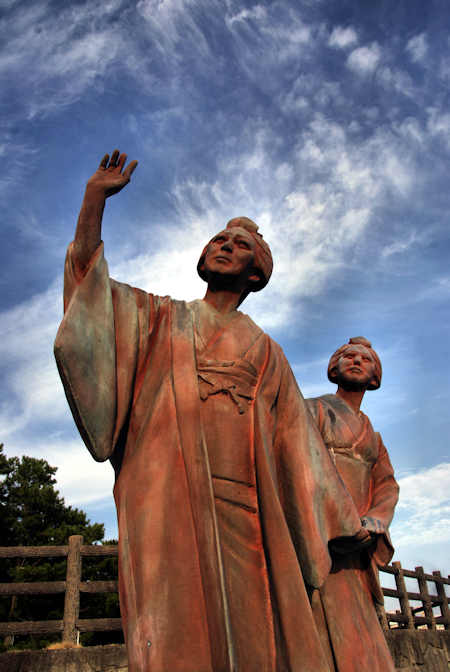
Tosa, the former name of Kochi, was one of the instigators of the Meiji Restoration, and there were statues of some of the major figures from Tosa associated with it. This is Ryo Narasaki, wife of the famous Ryoma Sakamoto.


For a section the path followed a cycle trail through the pines planted along the beach.


Like most areas of Japan, there were Kappa legends around here.....


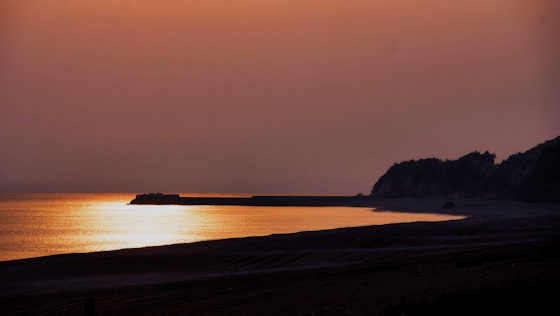
As sunset approached I reached my destination for the night, the Haginori zenkonyado. Zenkonyados are free lodgings for walking pilgrims provided by individuals rather than temples. Hagimori-san is well known among walking pilgrims as a source of up-to-date information on free lodgings on the route. His little cabins are located under the elevated railway near Nishibun Station. Two other pilgrims stayed that night..... not a busy time on the route...


Koinobori

Buy tatami direct from Japan

Friday, December 24, 2021

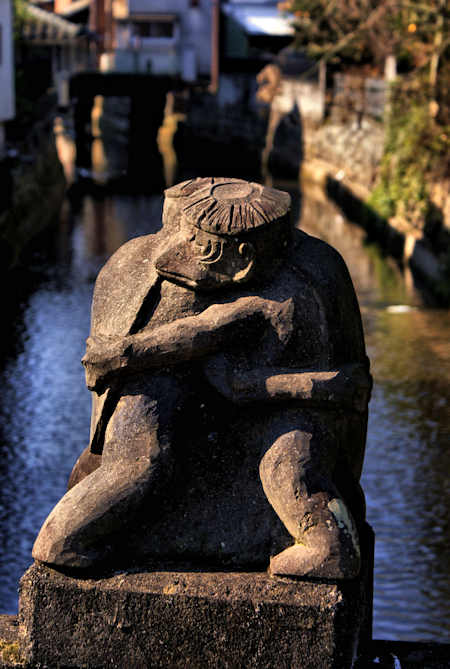
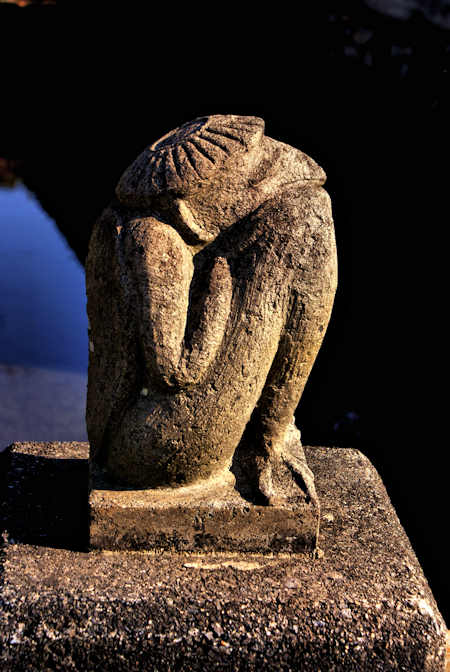
Kappa of Tanushimaru

Japan Guide


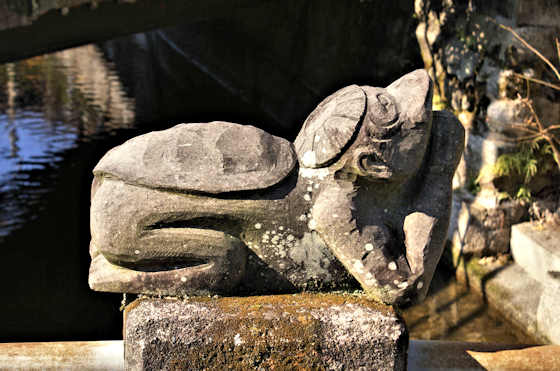
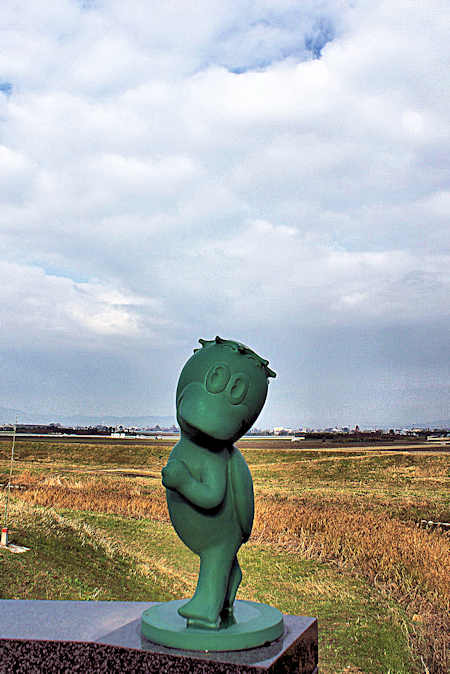
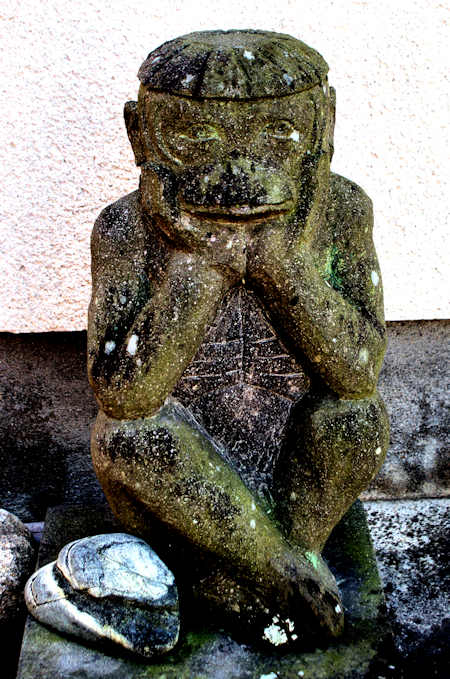
When I reached Tanushimaru along the Hita Kaido, another kind of statue, other than Ebisu,  started to appear, namely Kappa.....


One of the most well-known of the yokai, the kappa is usually translated into English as "water sprite" and is a creature that inhabits rivers, ponds, etc. Legends of kappa are found all over Japan. Nowadays it is often rendered in a "cute" form.


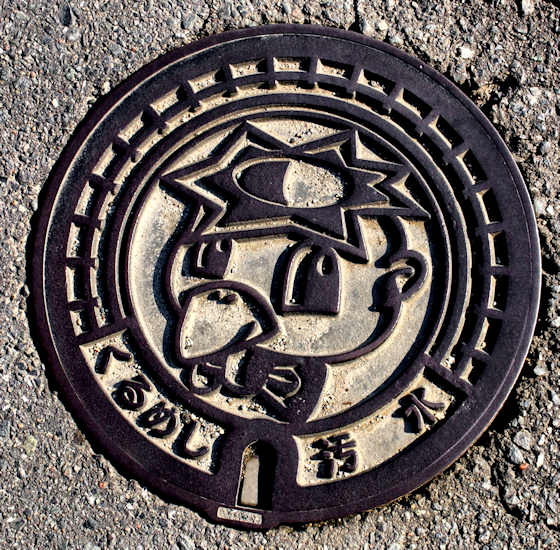
The kappa in the area are depicted in other ways as well as by statues. It is one of the towns that feature them on decorated manhole covers. Our local town also features a kappa, though it is called enko in our area. It is based on a legend from my village and one of these days I will get around to telling it to you.


Kappa throughout Japan have a similar form..... a turtle shell, a beak, webbed feet, and an indented skull with a fringe of hair. I suspect this homogeneity of form began in the Edo period when collections of yokai images were published and then later in the twentieth century at first with the work of folklorist Yanagita Kunio, and then later with the manga and anime works of artists such as Mizuki Shigeru.


I confess to not having done the work to research the actual kappa stories of Tanushimaru.


At the end of the days walk I took the train back to Kurume and was surprised to see the small station of Tanushimaru....