Showing posts with label concrete. Show all posts

Friday, October 3, 2025

Iwakuni to Obatake a Pleasant Walk Along the Seashore


11th November, 2014. After a good sleep in a hotel I am up before the sun and on my way down the Yamaguchi coastline on day 18 of my walk along the Chugoku Kannon Pilgrimage. Winter days are so short that I need to use all the available light. I am past the industrial areas when the sun comes up.


Usually where a river enters the sea will be a settlement....


The main Sanyo Line railway hugs the coast....


Someone getting ready to look for breakfast.....


Much of the route the road separated steepish slopes from the water....


Nice to see some sea defenses made out of stone and not concrete....


Beach used for school gym or sports class....


Every settlement has a harbour,,, usually with plentiful concrete...


A constant stream of planes heading in to land at Iwakuni. Both an American Marine base and a Japanese SDF base. American fighter jets from Iwakuni regularly buzz our village..... way below the legal altitude, something they would not do in a more populated area, they shake my house.... I guess the pilots are imagining themselves as Tom Cruise...


The Local History & Folklore Museum in the town of Yuu was intriguing.....


It was not open the day I passed by, but I believe much of their content is sea and fishing based...


Roadside attractions in Japan often veer towards the surreal and bizarre... As I approached my first thought was that it would be a restaurant and gift shop...


Sea defenses..... In general, I find the predominant Japanese attitude towards the natural world to be that it is an enemy. Something to be tamed, and controlled... like in a Japanese garden....


Not sure what plant these red berries are of.... though I have one in front of my house....


The Inland Sea is dotted with dozens and dozens of islands, many too small to have inhabitants.... in the far distance is the coast of Shikoku....


The channel between the mainland and Suo Oshima Island narrows. Stretching halfway across to Shikoku, Suo-Oshima is one of the bigger islands in the Inland Sea...


The Oshima Bridge crosses to Suo Oshima Island, a distance of about 1 kilometer. Time to start looking for a place to set out my sleeping bag.


The previous post in this series was on the previous day's walk from Miyajima to Iwakuni.
Wednesday, January 19, 2022

Day 14 on the Ohenro Trail Winds Down

Ohenro Trail Day 14

Ohenro Trail.

The famous Shikoku Pilgrimage, known as Ohenro, was the first formal pilgrimage I walked. Hard to believe it is now over ten years ago. In early October 2011 I was on the 14th day of walking


These are a few of the snapshots I took towards the end of the day. Most of the day had been taken up with the climb to Konomine-ji, the 27th temple of the pilgrimage, and Konomineji Shrine nearby. Coming up the coast I stopped in at Cape Oyama


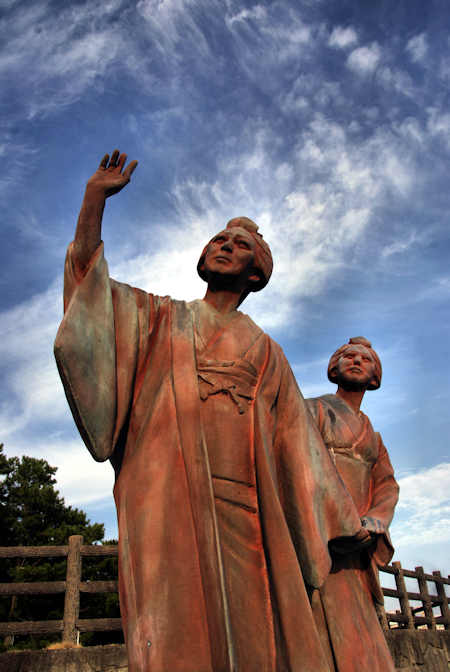
Tosa, the former name of Kochi, was one of the instigators of the Meiji Restoration, and there were statues of some of the major figures from Tosa associated with it. This is Ryo Narasaki, wife of the famous Ryoma Sakamoto.


For a section the path followed a cycle trail through the pines planted along the beach.


Like most areas of Japan, there were Kappa legends around here.....


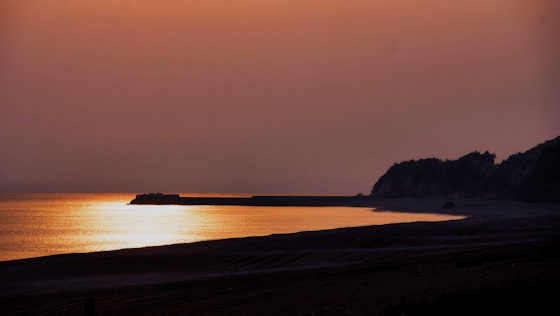
As sunset approached I reached my destination for the night, the Haginori zenkonyado. Zenkonyados are free lodgings for walking pilgrims provided by individuals rather than temples. Hagimori-san is well known among walking pilgrims as a source of up-to-date information on free lodgings on the route. His little cabins are located under the elevated railway near Nishibun Station. Two other pilgrims stayed that night..... not a busy time on the route...


Koinobori

Buy tatami direct from Japan

Thursday, August 5, 2021

Imaura Harbor


Continuing with the  second day of my in-depth exploration of the Sea of Japan coastline,I left the bounds of Gotsu and entered the realm of Oda and visited the harbour of Imaura.


I have passed through Imaura several times before while walking the narrow roads that hug the cpast here, but had never taken the side road that drops down to the fishing harbour.and was surprised by how big it was.


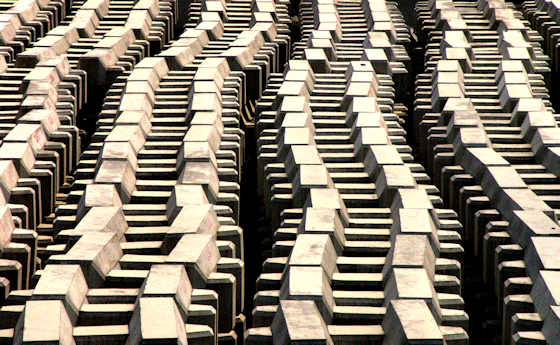
There are a lot of small islets and rocks just offshore that must provide some protection for the narbour, but like most places along the coast of Japan it is now protected and enclosed by massive concrete walls. The sheer amount of concrete poured  along the coast of Japan is probably not known to outsiders.


I wonder about the value of all the fish produced by this little harbour and if it ever approached the cost of all the concrete construction. But that was not the point..... LDP politicians will have won votes and concrete and construction companies will have made profits.


Set back up on the slope away from the waters edge a line of ramshackle fishermens huts suggest that before all the concrete this was probably just a protected beach rather than a harbour.

Wednesday, November 25, 2020

Views of the Inland Sea. Kinoe to Takehara Ferry


The Seto Nakai, or Inland Sea, is dotted with islands and islets, and while many have now been connected by bridges to each other and the mainland, there are still dozens and dozens of small ferries plying the waters. These photos I took on the ferry from Kinoe on Osaki Kamijima Island to Takehara in Hiroshima. Shipbuilding and repair is still a major industry on many islands.


Most Japanese seem blissfully unaware of the incredible amounts of concrete that are poured in Japan compared to other countries.


The island with the two transmission towers on it is Okunoshima, now most famous as "Rabbit Island", less famous as the site of a WWII poison gas factory, and almost unkown as the home of the tallest electricity transmission tower in all of Japan.


Some of the smaller islands have become floating factories. Not sure what is being produced or processed here.


Of course small fishing boats continue to operate.....

Saturday, February 24, 2018

Cement Town Tsukumi

Cement Town Tsukumi


Tsukumi is a small fishing port on the coast of Oita between Usuki and Saiki that I walked through after visiting temple 29, Kaiganji.


Kust inland is a massive limestone quarry many times larger than the town itself, and the fishing harbors are overshadowed by a large port that ships out the cement. In between is a complex of industrial infrastructure that processes the material.


To get through the town means passing right through the maze of factories, smokestacks, conveyor belts etc.


By any criteria, ie per capita, per acre, etc etc Japan produces more concrete than anywhere else in the world.......

Yuzukosho (yuzu pepper) is a signature product from Usuki & Hita

Thursday, August 8, 2013

Sanbe Dam


The second temple on the Iwami 33 Kannon pilgrimage (actually the first "extra" temple) is located on the mountainside above Sanbe Dam. Thats Mount Sanbe behind.


Seeing how aged the concrete is I was surprised to learn that the dam was not finished until 1996, although construction started in 1980.


The dam is a little over 54 meters high and 140 meters wide at its crest and is composed of 110,000 cubic meters of rock and concrete. Ostensibly the purpose of the dam is flood control and to supply water to Oda City, but its real purpose is to funnel money to construction companies.


The small reservoir has a capacity of 7,000,000 cubic meters of water.


Monday, May 3, 2010

Golden Week-end walk

Golden Week

I took advantage of the spell of wonderful weather this past weekend to go for a 40k walk. I wanted to walk the last section of the Shimane coast that I had not yet walked. I started out at Kasaura, a little village up on the Shimane Hanto (peninsular) north east of Matsue. I headed up the cape that protrudes north, passing through Noi, where I found a wonderful example of an old-style mikoshi in the local shrine.

Being the Japanese coast, I was never far from tetrapods.

On up through Sezaki, then over to Konami, all just little fishing villages with a few hundred inhabitants. I like these places. The houses are so close together there are only narrow passageways and steps between them, making labyrinths. I could see the shrine on the hill but I had to enlist the help of a passing local to help me navigate through the maze to find the steps up.

Being the Japanese coast, I was never far from concreted mountains.

And on up through Tako to Okidomari, the northernmost settlement on the tip of the cape. Concrete aside, the coast is quite spectacular, with white beaches and a clear, turquoise sea.

There are lots of rugged cliffs, little islands, sea caves. At times the coast of Shimane reminds me of Cornwall.

Then back down the cape along the only road back through Konami to Nonami, a "town" big enough to have three shrines, one of which was mentioned in the 8th century Izumo no Fudoki.

At the Hinomisaki branch shrine I spent at least 30 minutes chatting with three middle-aged ladies. There were the usual questions, where are you from, where are you going, what are you doing. I explained how I walked all over Shimane visiting shrines, learning the stories, histories, etc. One lady seemed to have a hard time getting her head around it. She kept asking "why?", but no matter what explanation I gave she blurted "But they are Japanese kami!!". Reminded me of a recent conversation wher I mentioned to a young woman that I made kagura masks and she replied..."BUT!! you are not Japanese!!!!"

Nihonjinron. The true Japanese religion.

And so I headed on,... the sun was a few hours from going down and I needed to find a nice place to sleep. On though Kaka, the place to take the boat tours to the Kaganokukedo. No boats were going out today though as it was way too windy. And on through Owashi, visiting shrines in each village. I noted that the majority of shrines had female kami.

I made my bed on the cliff above the roaring surf looking down on Mitsu, and beyond it the nuclear power station at Kashima. Built on a faultline that is much bigger than originally claimed, a second reactor is planned to be built here. (when I got home Yoko told me that the company had just publicly apologized for not replacing 530 parts that should have been replaced as part of scheduled safety maintenance)

I love sleeping outside, and I don't do it often enough! I watched a sublime sunset, and then woke regularly through the night and watched the full moons progress across my ceiling.